


Keychron K8 Ultra 8K review
The Keychron K8 Ultra 8K is a tenkeyless mechanical keyboard built for people who want one board for office work and PC gaming.…



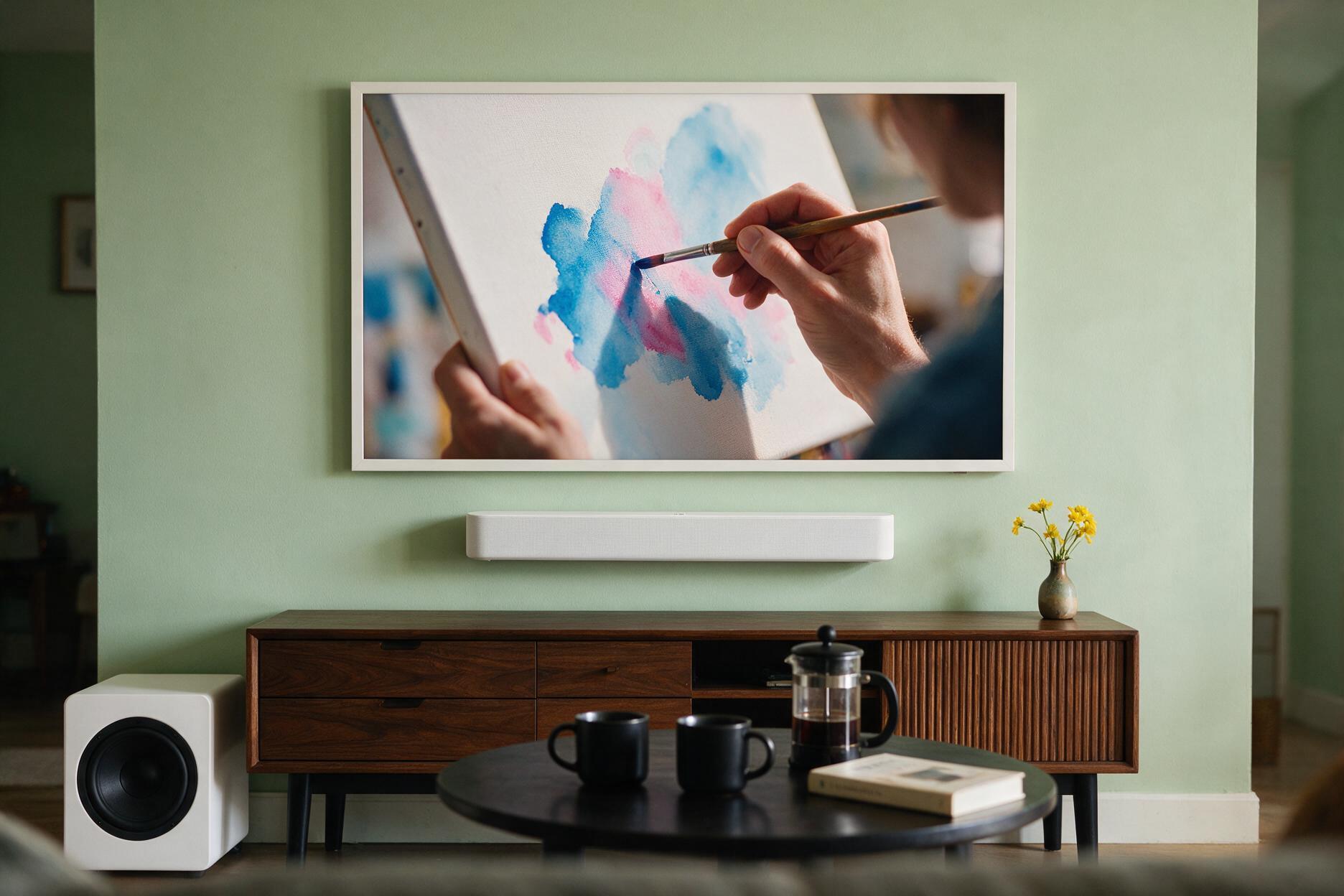
The right TV does more than play shows. It sets the scale of the sofa wall, the glow in the evening, and how the whole living room feels when guests sit down. A screen that is too small disappears. A screen that is too bright, too bulky, or hung too high fights the furniture you already love.
This guide helps you find the perfect TV for a dream living room. It covers size, placement, picture type, living-room lighting, sound, and the design details that make a TV look like it belongs there, not like it was dropped in last.
Walk the living room before you shop. Measure the wall or cabinet width, the distance from the sofa to the screen, and the height of the stand or mount. Note windows, lamps, and whether you watch with the curtains open. Those numbers decide size and panel type more honestly than a floor-model in a dark store.
A dream living room usually has a focal wall. That can be a media unit, a fireplace surround, or a clean plaster wall with a soundbar. The TV should fill that wall without crowding art, shelves, or walkways. Leave space around the frame so the room still breathes. Edge-to-edge TVs on a narrow cabinet look unfinished, no matter how thin the panel is.
Viewing distance is the fastest way to pick size. For a 4K living-room TV, 55 inches often fits sofas around 2 meters away. 65 inches suits about 2 to 2.5 meters. 75 inches starts to make sense closer to 2.5 to 3 meters, if the wall is wide enough. These are starting points. If you want a more cinematic feel and the furniture allows it, step up one size.
Remember that the number on the box is the diagonal. Width is what has to fit. A 55-inch TV is about 123 cm wide. A 65-inch TV is about 145 cm wide. A 75-inch TV is about 167 cm wide. Measure the media unit, the gap between speakers, and any fireplace mantel before you fall for the biggest screen in the aisle.
If you are between two sizes, the larger one usually looks more complete in a living room, as long as you are not sitting too close and the stand can take the weight. A slightly generous screen feels intentional. A screen that looks small the night you bring it home is harder to love.
OLED is the dream choice for movies, dark rooms, and deep contrast. Blacks look true, motion is smooth, and the panel is often slim enough to sit almost flush on the wall. In a bright living room with big windows, OLED can struggle with reflections and peak brightness. If you watch sport in daylight, compare it side by side with a bright LED or QLED set.
QLED and Mini-LED sets are often better in sunny lounges. They stay punchy with the blinds open, hold HDR highlights, and work well for mixed use: news in the afternoon, films at night, a console on the weekend. LED LCD remains the value option. It will not match OLED contrast, but a well-chosen 65-inch LED can still complete a room if the budget is going into furniture and a soundbar.
Anti-glare finishes, brightness, and viewing angle matter as much as the brand badge. If people sit off to the side, look for a panel that does not wash out from the armchair. A living room is rarely a single sweet-spot seat.
Eye level when seated is the rule that makes a living room feel considered. The center of the screen should sit near your natural eye line from the sofa, not near the ceiling. TVs mounted over a high fireplace often force you to look up. That gets tiring and makes even a beautiful set look like a hotel lobby.
If the fireplace wall is the only option, a pull-down mount or a lower media wall beside the fire is usually more comfortable. On a cabinet, keep the TV centered, with the soundbar in front or just below, cables hidden, and boxes in a closed unit. Visible HDMI spaghetti ruins an otherwise perfect living room faster than a mid-range panel does.
Leave room for ventilation. Slim TVs still need airflow. Do not trap the set in a shallow recess with no gap. Check VESA mount size, wall type, and cable routes before drilling. A clean install is part of finding the perfect TV, not an afterthought.
Dream living rooms almost never rely on built-in TV speakers. Slim panels have no space for real bass. A soundbar, or a compact soundbar with a wireless sub, will change movie night more than jumping from 55 to 65 inches. Match the bar width to the TV so the wall still looks designed.
If you already have bookshelf speakers, confirm HDMI ARC or eARC, and keep the TV’s audio output simple. For most homes, one good soundbar is enough. Hide the subwoofer beside the sofa or cabinet, not in the middle of the room. Picture and sound should feel like one system.
The smart TV platform is how you live with the set. You want apps that load quickly, a remote you can use in the dark, and AirPlay, Chromecast, or a reliable HDMI stick backup if the built-in OS feels slow. 4K streaming is the baseline in 2026. Check that Netflix, YouTube, and your local apps are supported without extra boxes if you want a clean cabinet.
Gaming in the living room needs HDMI 2.1, 120 Hz, and low lag if a console sits under the TV. If the living room is mainly films and series, those specs matter less than brightness, contrast, and motion handling. Buy for the way the room is actually used after dinner, not for a feature list you will never switch on.
Ambient mode, art frames, and slim bezels help a TV disappear when it is off. That is useful in an open-plan living room where the screen is always in view. A bright logo and a thick chin can cheapen an otherwise calm interior. Look at the set switched off in the shop, not only with a demo reel playing.
Match finish to the room. Black frames vanish on a dark media wall. Silver and light grey can look better in bright Scandinavian spaces, but they also show more in reflections. A gallery-style or frame TV suits rooms where the wall is on display all day. A standard flat panel suits a dedicated TV wall with shelves and a soundbar.
Repeat materials you already have. Wood stands with wood floors. Black metal with black lighting tracks. Hidden cables with hidden router lights. The perfect living-room TV is the one that does not shout. It should share the same lines as the sofa, rug, and coffee table, not compete with them.
Lighting around the TV matters too. A bias light behind the panel reduces eye strain and makes the picture feel bigger. Floor lamps should not point straight at the screen. If the room is glass-heavy, plan curtains or a slightly matte panel before you buy an 85-inch mirror.
Measure distance and wall width. Pick 55, 65, or 75 inches from that, not from the biggest sale sticker. Choose OLED for dark movie rooms and QLED or Mini-LED for bright lounges. Plan the mount height, the soundbar, and the cables as part of the same purchase. Then look at smart OS, HDMI ports, and whether the set looks calm when it is off.
If the budget is tight, keep the size right and put the rest into sound and a proper mount. A well-placed 65-inch TV with a soundbar will complete a living room more convincingly than a huge screen on a wobbly stand with tinny speakers.
What TV size is best for a living room? For most sofas, 55 inches or 65 inches is the sweet spot. Go 75 inches only if you have the seating distance and wall width to match.
Is OLED good for a bright living room? It can be, if you control glare and do not need maximum daytime punch. In a very sunny lounge, a bright QLED or Mini-LED set is often the more comfortable all-day TV.
Should I wall-mount the TV? Wall-mount if the height can sit near seated eye level and the wall is suitable. A low media unit is better than a high mount over a fireplace.
Do I need a soundbar? In a dream living room, yes. Built-in speakers in slim TVs are a compromise. A soundbar matched to the screen width finishes both the sound and the look.
What matters more, size or picture quality? Size has to fit the room first. After that, contrast, brightness, and motion decide whether the TV feels premium. The perfect set gets both right.
The perfect TV for your dream living room is the one that fits the sofa distance, respects the wall, handles the light you actually live with, and sits at a height you can watch for hours. Pair it with hidden cables and a soundbar, and the room feels finished.
Shop the space first, then the panel. When the screen, the furniture, and the sound work as one, you have more than a new TV. You have the living room you meant to build.



By subscribing you agree to our Terms & Conditions and Privacy & Cookies Policy.